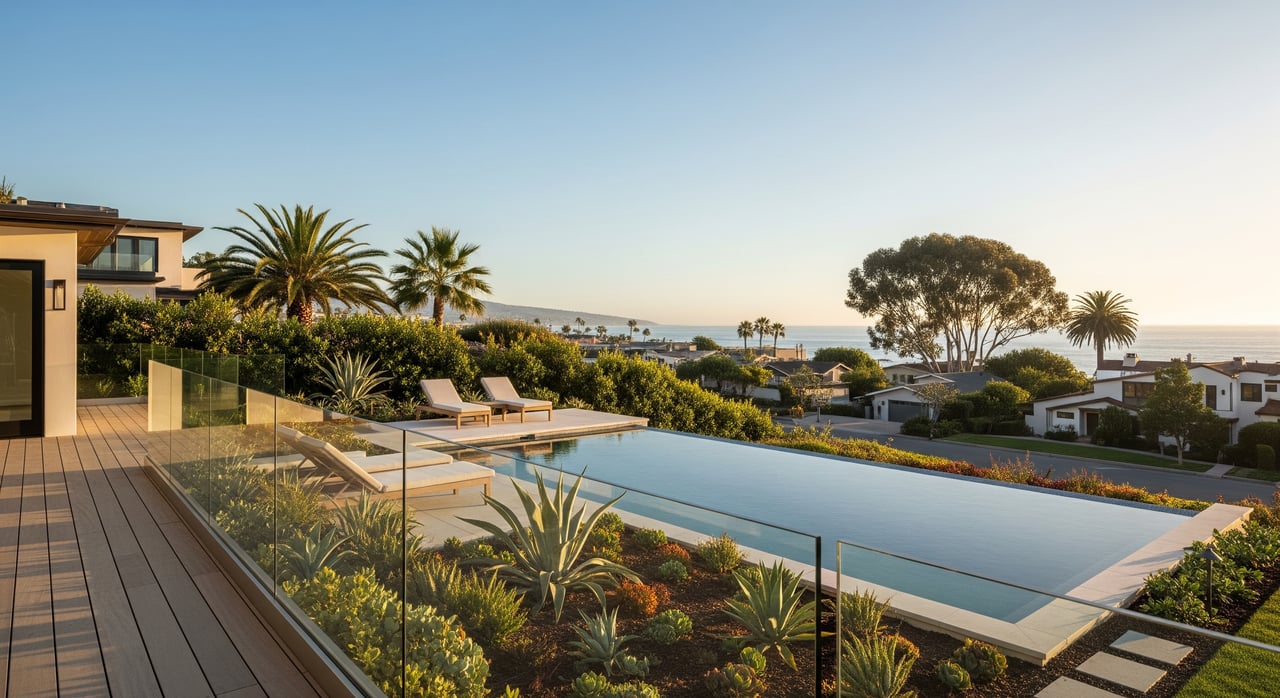
Do you picture coffee on your patio with waves in full view, or a quiet street where you can stroll to the beach and grab dinner on Coast Highway? In Encinitas, choosing between true oceanfront and west of I-5 is less about right or wrong and more about how you want to live, what risks you accept, and how you think about long-term value. You deserve clear facts to balance the dream with the dollars.
In this guide, you’ll learn how oceanfront and west-of-5 homes compare on lifestyle, risk, insurance, costs, and resale. You’ll also get a simple decision framework and a due diligence checklist tailored to Encinitas. Let’s dive in.
What counts as oceanfront vs. west of I-5
Oceanfront in Encinitas usually means bluff-top or beach-adjacent parcels with a property line that touches the coastal bluff or sand and has immediate, unobstructed ocean views. Many sit on bluff rims above pocket beaches like Swami’s, Moonlight, and Grandview.
West of I-5 homes sit between the freeway and the bluff but are not on the bluff edge. These neighborhoods span Old Encinitas, Leucadia, Cardiff-by-the-Sea, and South Encinitas, with walkable streets, local retail, and beach access points a short walk or drive away.
The shape of our coastline matters. Encinitas is defined by bluffs and stair-accessed beaches, so true oceanfront is scarce and varied by parcel. West of I-5 can still feel very coastal, often within 0.2 to 1 mile of beach stairs and Coast Highway amenities.
Lifestyle trade-offs that matter
Views and daily vibe
- Oceanfront gives you panoramic views and the sensory experience of waves, sunsets, and sea breezes all day. It carries prestige and a signature waterfront lifestyle.
- West of I-5 often trades endless horizon views for a broader mix of lot sizes, outdoor spaces, and neighborhood energy. Some blocks offer partial or corridor views, especially on higher streets.
Walkability and access
- Oceanfront puts you next to the coast. Beach access may be steps away, but you are not guaranteed private beach access because California protects public shoreline rights.
- West of I-5 can deliver excellent combined walkability to both beach and local cafes, shops, and services along Coast Highway. Actual walk distances depend on the block and stair locations.
Privacy and activity levels
- On the bluff, you may feel secluded from the street, but public beach stairs, viewpoints, and nearby access points can introduce foot traffic and noise. Privacy varies by parcel.
- West of I-5 often enjoys more privacy from beach crowds but may experience neighborhood or corridor activity depending on proximity to retail.
The coastal rules that shape what you can do
Encinitas follows the California Coastal Act through its Local Coastal Program, which guides development approvals, shoreline protection, and public access. Project approvals and setbacks consider sea level rise, bluff retreat, and long-term public access. For parcel-level references, start with the Encinitas Local Coastal Program and the California Coastal Commission resources.
Key implications for owners:
- Major shoreline work, like seawalls or bulkheads, usually requires permits and may be limited or conditioned.
- Setbacks for new work increasingly account for projected bluff retreat and sea level rise.
- Public access is a core policy, so projects cannot block or reduce established access.
Bluff erosion and physical risk
Encinitas bluffs retreat over time. Storm waves, groundwater seepage, and human activity can accelerate erosion. Bluff-top structures can face progressive land loss or, in rare cases, sudden slope failures. Even where stabilization is allowed, long-term retreat is still expected under many sea level scenarios.
What this means for you:
- Oceanfront carries higher exposure to bluff retreat, storms, and inundation. Regular geotechnical monitoring and drainage management are common.
- West of I-5 reduces direct bluff risk, though low-lying pockets can still face flooding or ponding during major events.
For planning and mapping tools, explore the NOAA Sea Level Rise Viewer for scenario-based visuals.
Insurance and cost considerations
Standard homeowners insurance typically excludes flood and storm surge. If your lender determines a property lies in a FEMA special flood hazard area, separate flood insurance is usually required. You can check preliminary status using the FEMA Flood Map Service Center and learn about coverage through the NFIP’s consumer site. The California Department of Insurance provides consumer guidance on coastal coverage and underwriting trends.
Plan for three cost categories if you are considering the bluff:
- Upfront: geotechnical reports, insurance premiums, and any mitigation work like drainage or utility elevation.
- Recurring: bluff maintenance, vegetation management, stairway or hardscape upkeep, and periodic professional inspections.
- Contingent: major stabilization, partial land loss, or structural changes if retreat encroaches. Permits for new armoring may be limited or conditioned.
West of I-5 homes often have simpler insurance, more typical maintenance, and fewer specialized costs, though actual premiums still depend on elevation, mapping, and underwriting.
Resale dynamics and buyer pools
Oceanfront is scarce and can command a strong premium per square foot. It tends to attract buyers who prioritize views and lifestyle and accept higher maintenance and risk. That buyer pool is narrower, which can create more volatility as coastal hazards and insurance availability evolve.
West of I-5 has a broader buyer base. Homes often sell faster in entry and mid-price brackets for the area because the lifestyle is coastal, the risks are lower, and the costs are more predictable. Appraisers consider bluff distance, armoring history, and flood mapping when analyzing oceanfront comps, so small differences in condition or risk profile can have a large impact on value.
Oceanfront or west of I-5: a quick decision guide
Pick oceanfront if you:
- Prioritize panoramic views and immediate ocean presence every day.
- Are comfortable with higher maintenance, complex permitting, and possible insurance constraints.
- Accept long-term physical risk in exchange for a one-of-a-kind setting.
Pick west of I-5 if you:
- Want strong coastal lifestyle with simpler ownership and broader resale demand.
- Prefer larger lot options, traditional backyards, and convenient street access.
- Value walkability to both the beach and local amenities with lower direct bluff exposure.
Due diligence steps before you buy
Use this checklist to validate a specific address:
- Verify coastal rules and permits
- Review the property’s permit history and any recorded easements. Start with the Encinitas Local Coastal Program and confirm whether past stabilization or access conditions exist.
- Assess bluff and inundation risk
- Order a current geotechnical report that addresses slope stability, drainage, and bluff retreat. Use the NOAA Sea Level Rise Viewer for context and ask for parcel-specific modeling where available.
- Check flood mapping and insurance
- Look up the address in the FEMA Flood Map Service Center. If the home is in a mapped hazard zone and you plan to finance, expect a lender requirement for flood insurance. Compare options through the NFIP’s consumer site and review guidance from the California Department of Insurance.
- Understand maintenance needs
- Budget for drainage tuning, vegetation management, stair or hardscape upkeep, and regular professional inspections on oceanfront. West of I-5 homes usually have simpler upkeep but confirm any site-specific needs.
- Align financing and timeline
- Ask your lender about conditions related to coastal hazards or insurance. Confirm how underwriting could affect closing and costs.
- Plan improvements with policy in mind
- If you intend to remodel or expand, discuss expected setbacks, elevation standards, or armoring limits with a coastal planner. The California Coastal Commission provides policy guidance that local reviews must follow.
The bottom line for Encinitas buyers
There is no substitute for waking up on the bluff with the Pacific on full display. There is also no substitute for a short, easy walk to the beach and dinner, with simpler ownership and broader resale appeal. Oceanfront delivers the most dramatic lifestyle and the most complex risk profile. West of I-5 balances coastal living with practical costs and flexibility.
If you want a clear, parcel-specific plan that respects your lifestyle goals and your balance sheet, we would be honored to help. Reach out to McCoy | Obermueller & Associates to schedule a private consultation.
FAQs
What is the main legal framework for Encinitas oceanfront property?
- The City implements the California Coastal Act through its Local Coastal Program, which guides development approvals, shoreline protection, setbacks, and public access.
Can I build or extend a seawall below my bluff-top home?
- New hard armoring typically requires permits and may be limited or conditioned by the City and the California Coastal Commission, which prioritize long-term public access and coastal impacts.
How do I know if flood insurance will be required by my lender?
- Check the address in the FEMA Flood Map Service Center and confirm with your lender. If the property is in a mapped hazard zone, flood insurance is usually required when financing.
Do oceanfront homes in Encinitas have private beaches?
- In California, beaches seaward of the mean high tide line are generally public. Private owners rarely have exclusive beach rights, and access easements may apply.
What extra inspections should I order for a bluff-top home?
- Obtain a current geotechnical report, review permit history and easements, check FEMA flood mapping, and consult insurance availability and cost before removing contingencies.
How do resale prospects differ between oceanfront and west of I-5?
- Oceanfront can command a premium but has a narrower buyer pool and more volatility. West of I-5 typically attracts broader demand and can be easier to resell, depending on price bracket and location.