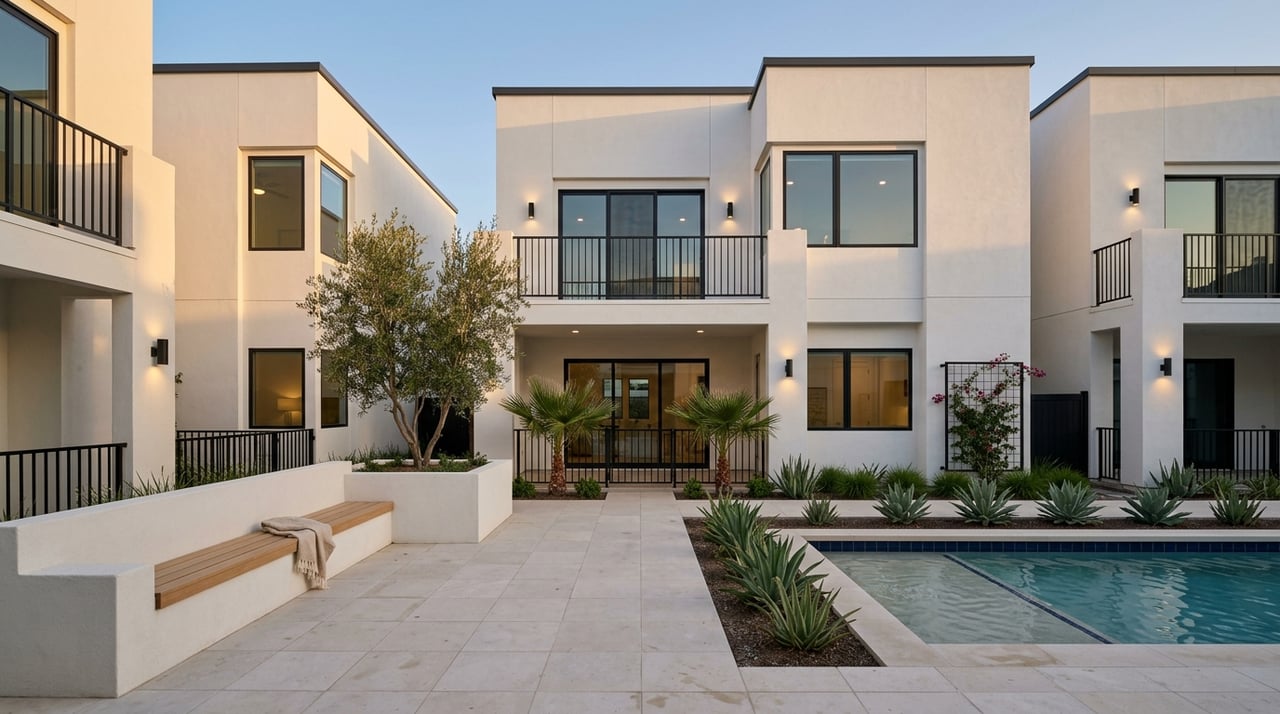
Wondering whether a condo or townhome is the right way to buy into Encinitas? If you want a coastal lifestyle with less day-to-day upkeep, an attached home can be a smart fit, but the right choice depends on more than price or square footage. In Encinitas, your experience often comes down to location, HOA structure, and how much flexibility you want for future use and updates. Let’s dive in.
Why attached homes work in Encinitas
For many buyers, condos and townhomes offer a simpler way to enjoy Encinitas without taking on the maintenance of a larger detached property. That can be especially appealing if you are downsizing, relocating, buying a second home, or simply want more time to enjoy the coast and less time managing exterior upkeep.
Encinitas also supports that lifestyle well. The city reports 20 community parks, three sports parks, a skatepark, a 2-acre off-leash dog park, 82 acres of open space, 45 acres of beaches, and 40 miles of trails. If you value outdoor access, those public amenities can help offset the need for a large private yard.
Transit adds another layer of convenience. The Encinitas COASTER station at 25 East D Street connects to a rail line running between Oceanside and downtown San Diego, and the city’s mobility planning highlights walking, biking, and rail-corridor access. For buyers who travel often or want a more flexible routine, that can make attached living feel more practical and more truly lock-and-leave.
Encinitas communities shape the lifestyle
In Encinitas, the better question is often not condo or townhome, but which part of the city fits how you want to live. The city is organized around five communities: Cardiff-by-the-Sea, Leucadia, New Encinitas, Old Encinitas, and Olivenhain. Each has a distinct character, and that difference matters when you are choosing an attached home.
Old Encinitas and Leucadia
Old Encinitas is the historic downtown core, while Leucadia is the beachside corridor north of downtown. The city’s design guidance describes Leucadia’s Highway 101 area as beachside and café-oriented, with much of it within walking distance of Beacon’s Beach.
If your ideal day includes coastal access, local dining, and a more walkable rhythm, these areas may feel like the best match. Attached homes here can offer convenience and access, though buyers should expect a setting with more activity and a stronger coastal influence.
Cardiff-by-the-Sea
Cardiff is described by the city as village-like and known for strong ocean-view potential. For buyers drawn to a coastal setting with a distinctive neighborhood feel, condos and townhomes in or near Cardiff can offer a compelling mix of scenery and lower-maintenance living.
That said, the coastal setting comes with added questions, especially around HOA responsibilities, exterior maintenance, and potential future approvals for changes. Those details matter just as much as the views.
New Encinitas and Olivenhain
New Encinitas is more suburban and corridor-oriented, while Olivenhain is lower-density and more rural or equestrian in character. In practice, attached housing is generally more aligned with the city’s walkable coastal and corridor areas than the most rural parts of Encinitas.
If you want quieter streets or a less beach-centered daily routine, New Encinitas may be worth close consideration. Olivenhain is usually less associated with condo and townhome living because of its lower-density character.
Where condos and townhomes tend to cluster
Encinitas planning documents point buyers toward several areas where attached housing is more likely to be found. These include Downtown Encinitas, the North 101 Corridor, Cardiff-by-the-Sea, El Camino Real, and Encinitas Ranch.
That does not mean every attached-home option will look or feel the same. It does mean your search will often center around either coastal, walkable locations or more corridor-based communities with easier access to shopping, commuting routes, and daily services.
What to review before you buy
In California, buying a condo or townhome usually means buying into a common interest development and automatically becoming a member of the homeowners association. That structure affects your monthly costs, what you can change, what is maintained for you, and what rules apply to the property.
According to the California Department of Real Estate, the governing documents can address assessments, insurance requirements, architectural controls, parking, balconies, landscaping, improvements, and rental rules. In other words, the home itself is only part of what you are buying. You are also buying into a system of shared obligations and shared decision-making.
HOA dues and assessments
Monthly dues often help fund day-to-day operations and reserve maintenance. Special assessments may be used for major repairs, replacements, new construction, or unexpected expenses.
That is why it is important to look beyond the monthly number alone. A lower HOA fee may not always mean lower long-term cost if the association has weak reserves or a history of special assessments.
Governing documents
Before you commit, review the CC&Rs, bylaws, and rules and regulations. These documents can shape everything from pet policies to parking limitations to what kind of exterior changes are allowed.
This step matters because restrictions that seem minor on paper can have a real impact on daily life. If you plan to rent the property at some point, host frequent guests, or make design updates, the rules deserve careful attention.
Insurance, reserves, and management
The California Department of Real Estate also notes that buyers may want to confirm whether the association has adequate insurance, a solvent budget, and sufficient reserves. Those are practical signs of how the community is being run and how prepared it may be for future maintenance needs.
DRE public reports are especially important because they contain material disclosures such as CC&Rs, costs, and assessments. Reviewing them early can help you avoid surprises later in the process.
Questions to ask when touring
When you tour an Encinitas condo or townhome, focus on the questions that will shape your ownership experience the most.
Ask about:
- What the monthly dues cover
- The current reserve picture
- Whether there have been recent special assessments
- Rental restrictions or caps
- Pet rules
- Parking and guest parking
- Responsibility for exterior maintenance versus interior maintenance
- Insurance responsibilities between the HOA and owner
- Rules for balconies, decks, and visible exterior changes
These are not small details. In an attached-home purchase, they often have as much impact on satisfaction and resale as the floor plan itself.
Coastal trade-offs matter in Encinitas
Encinitas offers a highly desirable coastal setting, but coastal ownership comes with real planning and maintenance context. The city says coastal management must balance development, biological resources, recreation, aesthetics, water quality, erosion, hazardous weather impacts, and quality of life.
That matters because about two-thirds of Encinitas lies within the coastal zone, where the city has local coastal development permit authority. If you are buying near the coast, you should understand that the setting brings both lifestyle benefits and added layers of review for certain projects.
Sea-level rise and erosion
The city says sea-level rise, storm surge, and erosion have narrowed beaches and created wave encroachment on coastal bluffs, affecting public and private infrastructure. Encinitas has responded with beach nourishment and shoreline-restoration efforts, including projects along the Beacon’s-to-Swami’s stretch and at Cardiff State Beach.
For buyers, this is not a reason to avoid coastal property. It is a reason to ask more informed questions about location, maintenance, and long-term planning.
Future remodeling and approvals
Within the coastal zone, some improvements, additions, and alterations may require review and approval of a Coastal Development Permit. In a condo or townhome, that can mean you may need both HOA approval and city coastal review before making certain exterior or visible changes, depending on the property and the scope of work.
If you know you want to update windows, modify a balcony, change exterior finishes, or take on a larger remodel, this should be part of your evaluation early on. It is much easier to buy with clarity than to discover limits after closing.
A smart pre-tour checklist
Before you start touring, it helps to narrow your search with a simple checklist. This can save time and help you compare homes on the factors that matter most in Encinitas.
Use this list as a starting point:
- Identify which Encinitas community best fits your lifestyle
- Confirm whether the home is in a coastal, corridor, or more suburban setting
- Ask what the HOA dues cover
- Review reserves and any history of special assessments
- Understand rental, pet, and parking rules
- Clarify exterior maintenance and insurance responsibilities
- Verify whether future improvements may require HOA approval, coastal approval, or both
When you approach attached-home buying this way, you move from browsing listings to making a more confident lifestyle decision.
Buying a condo or townhome in Encinitas can be an excellent way to enjoy the best of North County living with a smaller maintenance footprint. The key is to match the property not just to your budget, but to your preferred pace, location, and level of flexibility. If you want thoughtful guidance on where to focus, what to ask, and how to compare the options clearly, McCoy | Obermueller & Associates would be glad to help.
FAQs
What should you know before buying a condo in Encinitas?
- You should review HOA dues, reserves, special assessments, rental and pet rules, parking policies, insurance responsibilities, and whether future improvements may need HOA or coastal approval.
How is buying a townhome in Encinitas different from buying a detached home?
- Buying a townhome usually means joining a homeowners association, following governing documents, and sharing certain maintenance and financial responsibilities through regular dues and possible special assessments.
Which Encinitas areas are most common for condos and townhomes?
- City planning materials point buyers toward areas such as Downtown Encinitas, the North 101 Corridor, Cardiff-by-the-Sea, El Camino Real, and Encinitas Ranch for attached-home options.
Why do coastal zone rules matter for Encinitas condo buyers?
- Coastal zone rules matter because some exterior improvements, additions, and alterations may require city review through a Coastal Development Permit, which can add another step beyond HOA approval.
Are condos and townhomes a good fit for relocation buyers in Encinitas?
- They can be a strong fit for relocation buyers who want lower maintenance, access to parks and beaches, and convenience near walking, biking, and rail connections such as the Encinitas COASTER station.