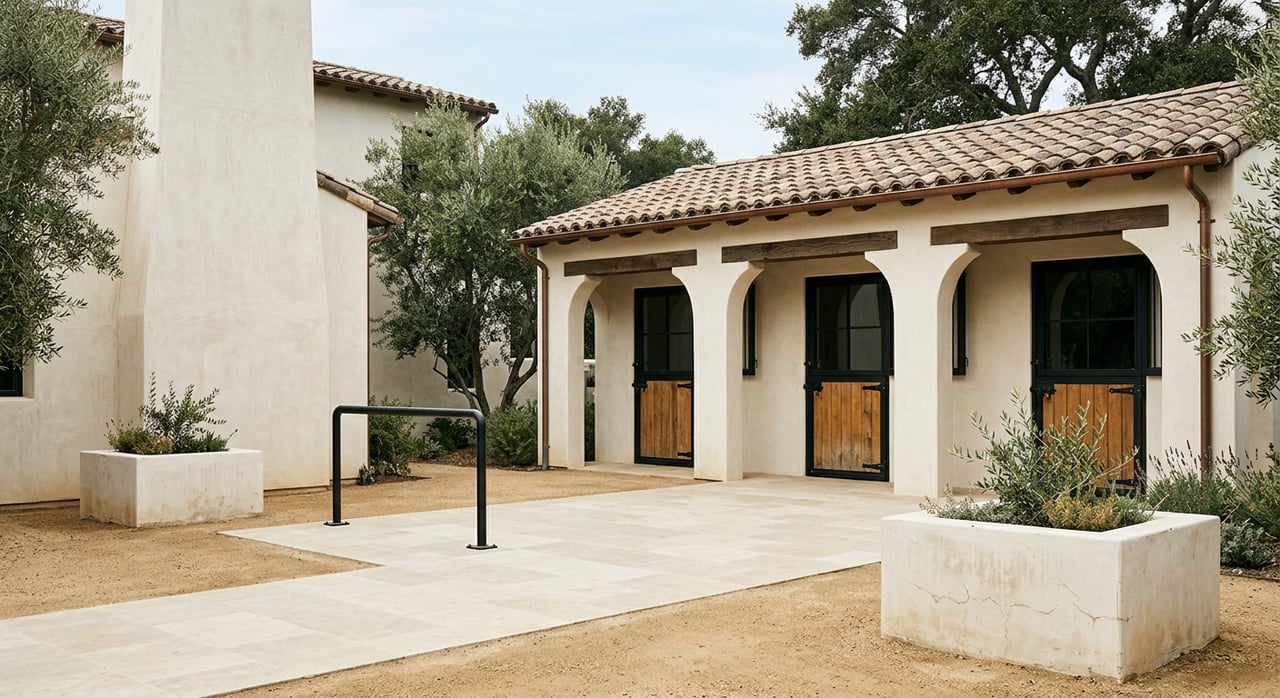
If you picture morning rides from your own gate and easy access to trails, two North County names rise to the top: Bonsall and Fallbrook. Both offer rural charm, equestrian culture, and room to build your vision. Yet they feel different when you factor in terrain, trail systems, utilities, and permit pathways. This guide compares what matters most and gives you a practical checklist to vet any horse property before you write an offer. Let’s dive in.
How Bonsall and Fallbrook feel
Bonsall: foothills and coast access
Bonsall sits in rolling foothills along the San Luis Rey River corridor. The community plan emphasizes low-density estate lots, agriculture, and equestrian uses, with many parcels outside the town core ranging from about 1 acre to 20-plus acres. That pattern supports private arenas, barns, and off-road access right from home. You also sit closer to Oceanside, so drives to coastal veterinarians, competitions, and tack shops are usually shorter.
For planning and land-use context, review the County’s detailed Bonsall Community Plan.
Fallbrook: agricultural valley and preserve
Fallbrook’s identity leans agricultural, with avocado and citrus groves, vineyards, and rural equestrian parcels surrounding a preserved village center. The topography features rolling hills and river canyons, and the community is set farther inland than Bonsall. You will typically drive a bit longer to reach the coast, but you gain a broader agricultural valley feel and access to a standout riparian trail system.
For the full land-use picture, explore the Fallbrook Community Plan.
Riding access and equestrian culture
Bonsall: San Luis Rey corridor
Bonsall’s historic riding routes hug the San Luis Rey River, with north and south alignments that tie into local roads and rural lanes. The County’s trail plan preserves equestrian use along these corridors and documents decades of club rides and staging areas. If daily hack-outs, track-adjacent training energy, or quick hauls to coastal arenas are your priority, this corridor is a major plus. See the County’s Bonsall Community Trails & Pathways Plan for mapped routes and policies.
Fallbrook: Santa Margarita Preserve
Fallbrook’s crown jewel is the Santa Margarita River Trail Preserve, a protected riparian corridor with long, scenic rides. You will find roughly 18 miles of multi-use trails and horse trailer staging areas, including corrals and water at the main trailhead. Local community resources like Fallbrook Riders Field support shows, clinics, and gatherings that make it easy to plug into the scene. Preview route options on the Santa Margarita River trail map.
Lot sizes and value drivers
County equine planning documents show a wide spectrum of rural parcel sizes across unincorporated North County. In the project area studied, the average property size is about 4 acres, with a median near 2 acres. In Bonsall, lots outside the center commonly run 1 to 20-plus acres; in Fallbrook, the plan emphasizes low-density rural areas and larger agricultural holdings in grove and valley lands. These patterns create real options for backyard horses, training arenas, or income-producing agricultural overlays.
Value is driven less by the community name and more by usable acreage and permitted improvements. Barns, irrigated pastures, arenas, multiple stalls, and reliable water infrastructure typically add a premium per acre. Always verify that improvements are permitted and that usable area supports your goals. The County’s equine ordinance and environmental report outline the framework for how permitted horse counts and commercial uses are determined; you can review the summary in the County’s equine program overview.
Zoning and permits you must confirm
Both Bonsall and Fallbrook fall under County of San Diego jurisdiction. Every parcel carries an Animal Designator that dictates how many horses you can keep and whether boarding, lessons, or a commercial stable are allowed by right or by permit. Some designators allow streamlined administrative permits for lower-intensity operations, while others require a Major Use Permit.
- Start with the parcel’s APN and Animal Designator. The County’s PDS-359 fact sheet explains the designator system.
- If you plan to board or train for the public, check which permit tier applies and whether prior approvals or nonconforming uses exist. The County’s equine permit framework outlines thresholds tied to usable area and horse counts.
- Ask how “usable area” will be calculated. Steep slopes, riparian buffers, and existing improvements are subtracted and can change capacity.
Water, septic, and utilities checks
Rural horse properties live or die by water and wastewater capacity. Many parcels rely on septic and, in some areas, private wells. Public water and sewer coverage varies by district and location, so confirm service boundaries and meter size before you assume irrigation or large-scale stock watering will be feasible.
- Wells: Request well logs, permit numbers, recent pump tests, and water-quality results. The County’s private well permitting program explains requirements and records to request.
- Septic: Where sewer is not available, you need an approved onsite wastewater treatment system layout. Soil, slope, high groundwater, or lack of reserve area can limit building or additions. Review the County’s onsite wastewater guidance and get layout approval early.
Wildfire readiness and access
Bonsall and Fallbrook sit in the wildland-urban interface with mapped Fire Hazard Severity Zones. Defensible space, hardened structures, and safe access routes are essential for horse properties. The 2017 Lilac Fire, which started near Bonsall, burned thousands of acres, forced evacuations, and caused equine losses. That event is a stark reminder to plan ahead.
- Check your property’s status on the state Fire Hazard Severity Zone map.
- Ask the local fire agency about driveway width, turnouts, and water supply expectations.
- Build an evacuation plan with trailer staging, multiple egress options, and a communication tree. You can review incident context in Cal Fire’s Lilac Fire report.
Which community fits your vision?
- Choose Bonsall if you want quicker coastal access, a foothill setting tied to the San Luis Rey corridor, and proximity to historic training activity. The community plan supports low-density estates with equestrian uses, but always confirm parcel-level utilities and wildfire considerations. Review the Bonsall Community Plan for context.
- Choose Fallbrook if you value an agricultural valley feel, larger contiguous groves, and long, riverside trail rides through a protected preserve. The community encourages rural, low-density character with strong equestrian identity. See the Fallbrook Community Plan and the Santa Margarita River trail map to visualize options.
- For compact ranchettes on 1 to 3 acres, either community may work. Your fit will hinge on the parcel’s Animal Designator, well yield or water service, and septic feasibility.
Buyer checklist for horse parcels
Use this quick, practical checklist before you write an offer:
- Get the APN and confirm the parcel’s Animal Designator and zoning with County PDS. Start with the County’s PDS-359 guide.
- If you plan boarding, lessons, or training for the public, ask PDS which permit tier applies and if any prior approvals exist. The County’s equine permit overview outlines thresholds.
- Confirm water: Request well logs, permits, and recent pump tests, or verify public water district and meter size. See the County’s well program.
- Confirm septic: Ask for DEH layout approval or whether new percolation testing is needed. Review onsite wastewater guidance.
- Verify usable acreage: Obtain a topo map and ask how steep slopes, riparian buffers, and easements affect buildable area.
- Check wildfire safety: Confirm Fire Hazard Severity Zone status, driveway width, and trailer access. Reference the state hazard maps.
- Verify trail access: Use the Bonsall Trails Plan and Santa Margarita trail map to confirm nearby public easements and staging.
Ready to compare properties?
Your best fit comes down to how you ride, how many horses you keep, and what you plan to build. Bonsall often suits riders who want quicker coast access and a foothill setting tied to the San Luis Rey corridor. Fallbrook often suits those who want a broader agricultural landscape and long, riparian rides along the Santa Margarita. Wherever you land, verify the Animal Designator, water and septic, usable acreage, and wildfire plan before you commit.
If you want a focused, property-by-property review and a strategy to secure the right parcel, reach out to McCoy | Obermueller & Associates to schedule a private consultation.
FAQs
What is an Animal Designator and why does it matter?
- The County assigns each parcel an Animal Designator that controls horse counts and whether boarding or commercial uses are allowed, which you can review in the County’s PDS-359 fact sheet.
How do I confirm trail access from a specific property?
- Check recorded easements and compare the parcel’s location to mapped routes in the Bonsall Trails Plan or the Santa Margarita River trail map.
What permits do I need to run a boarding stable?
- Permit requirements depend on your parcel’s Animal Designator, usable area, and horse count, with tiers ranging from administrative permits to Major Use Permits outlined in the County’s equine permit framework.
How should I evaluate water and septic for horse use?
- Request well logs, recent pump tests, and water-quality results or confirm public water meter size, and verify septic layout approval using County well guidance and onsite wastewater guidance.
How does wildfire risk affect horse properties in Bonsall and Fallbrook?
- Both communities sit in mapped WUI zones, so plan for defensible space, hardened structures, and horse-trailer egress using the state Fire Hazard Severity Zone map and lessons from the Lilac Fire report.